Investing in Your Leaders
Leadership Development
Introduction
Executives coached across industries
%
Led by licensed psychologists
How We help
Explore Our Leadership Development Services
High-Impact Leadership Development Programs

Highlights

Frequently Asked Questions
What leadership development topics can be customized?
DILAN customizes leadership development programs around your organization’s business priorities, culture, and leadership needs.
Programs may address executive communication, emotional intelligence, leadership presence, decision-making, coaching and feedback, conflict management, accountability, change leadership, and other critical leadership capabilities.
Rather than using an off-the-shelf curriculum, we connect development to the real situations your leaders are navigating so they can immediately apply what they learn.
How are leadership development programs designed?
DILAN begins by understanding your organization’s business goals, leadership challenges, culture, and desired outcomes.
Depending on the engagement, we may use stakeholder interviews, assessments, organizational data, or leadership feedback to identify development priorities.
Our consultants then design an evidence-based program that combines psychological insight, practical tools, and experiential learning around the situations your leaders actually face.
How long are leadership development programs?
Leadership development programs can range from a focused half-day or full-day workshop to multi-session programs delivered over several months.
The right format depends on your organization’s goals, the leaders participating, and the depth of development you want to achieve.
For deeper behavioral change, DILAN typically recommends learning over time so leaders can practice new behaviors, apply them to real workplace situations, receive feedback, and continue developing.
Who should participate in leadership development?
DILAN develops programs for leaders at every stage, including emerging leaders, people managers, directors, VPs, senior executives, and C-Suite leaders.
Programs can also be designed for intact leadership teams or cohorts preparing for greater responsibility.
The most effective programs connect leadership development to a specific organizational need, such as growth, succession, transformation, culture change, or strengthening the leadership pipeline.
Our Latest E-books
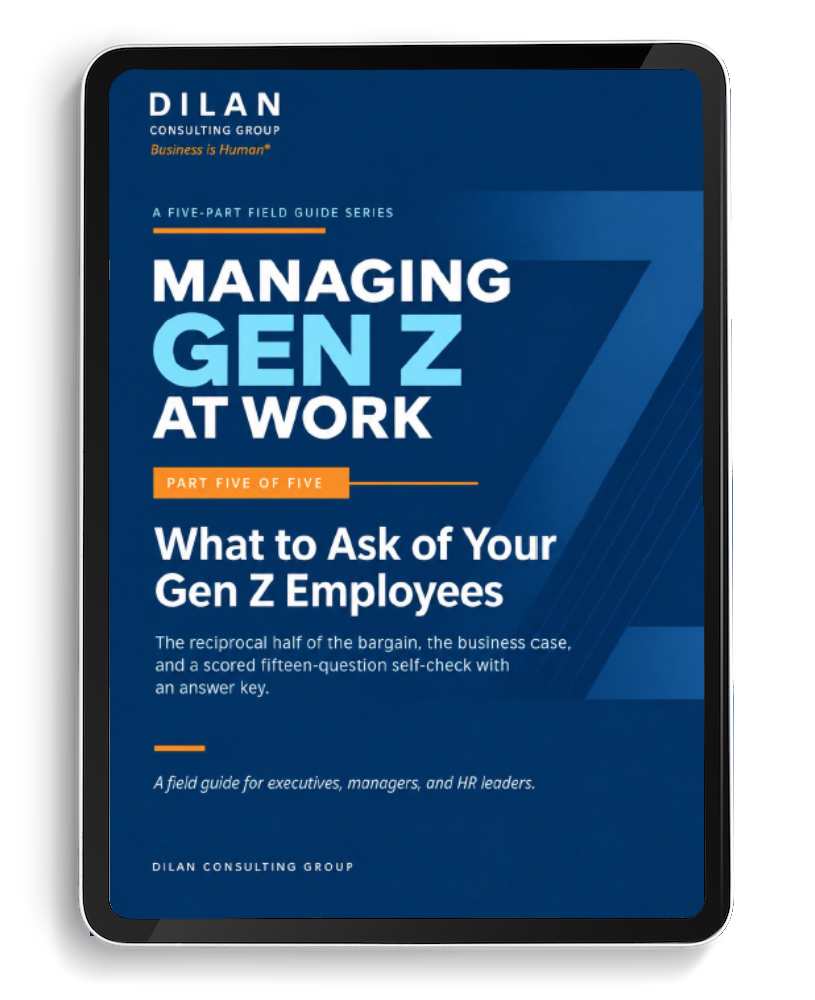
A FIVE-PART FIELD GUIDE SERIES
Managing Gen Z At Work Part 5
The reciprocal half of the bargain, the business case, and a scored fifteen-question self-check with an answer key.
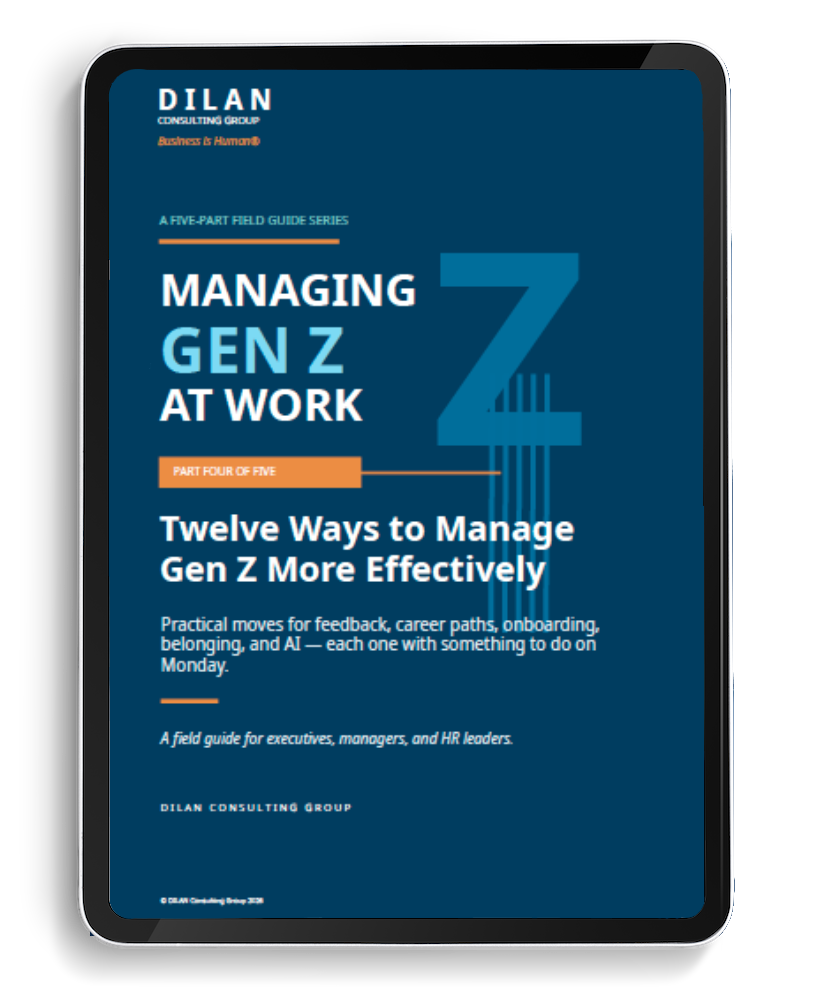
A FIVE-PART FIELD GUIDE SERIES
Managing Gen Z At Work Part 4
Practical moves for feedback, career paths, onboarding, belonging, and AI — each one with something to do on Monday.
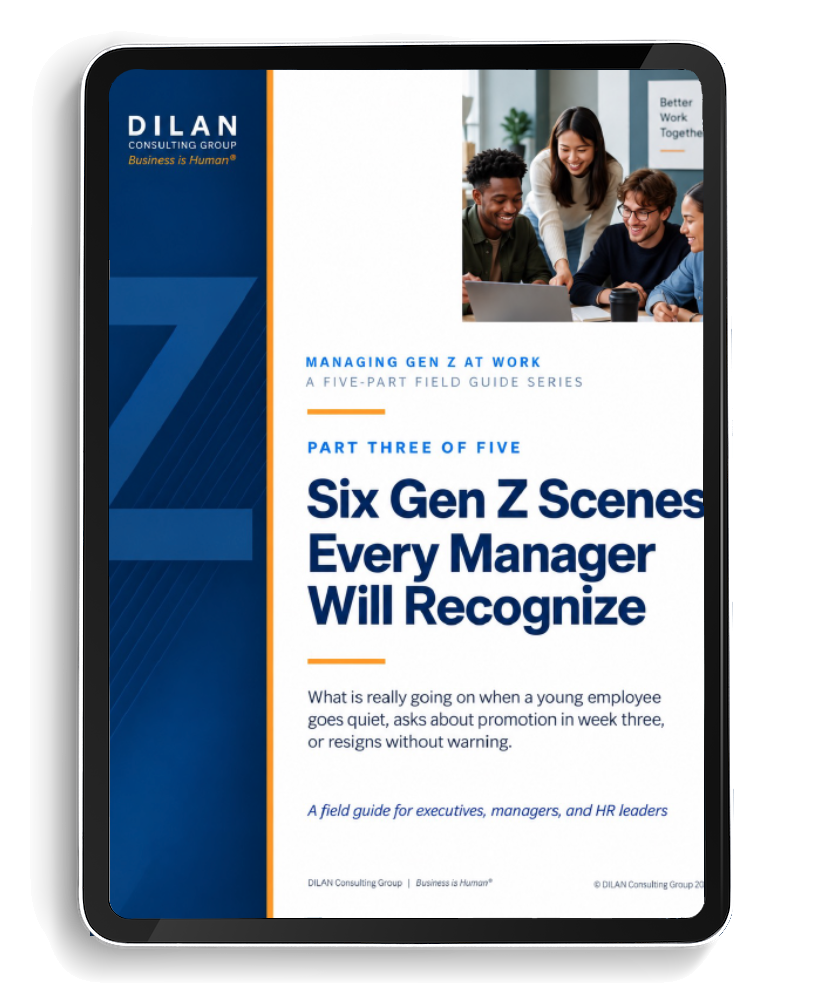
A FIVE-PART FIELD GUIDE SERIES
Managing Gen Z At Work Part 3
What is really going on when a young employee goes quiet, asks about promotion in week three, or resigns without warning.
Executive Coaching for Key Talent
Transforming leadership effectiveness through insight and measurable growth.

What You’ll Gain
Frequently Asked Questions
Who is a good candidate for executive coaching?
A good candidate for executive coaching is a leader who wants to grow and is willing to examine how their behaviors affect their leadership effectiveness and the people around them.
This can include successful executives preparing for greater responsibility, leaders navigating new challenges, or individuals working to strengthen specific leadership capabilities.
The most successful coaching candidates are open to feedback, willing to be challenged, and committed to applying what they learn. They recognize that meaningful development requires more than insight; it requires practicing new behaviors, strengthening emotional intelligence, and taking an active role in their own growth.
How are executive coaching engagements developed?
Each executive coaching engagement is tailored to the leader’s strengths, challenges, and development goals, in coordination with the organization’s HR team and the executive’s manager.
Coaching goals are aligned with the company’s mission, values, opportunities, and business challenges.
Through assessment, feedback, goal setting, and one-on-one coaching, DILAN helps executives strengthen leadership skills, build emotional intelligence, and address behavioral patterns that may be limiting their effectiveness. The goal is lasting behavioral change that benefits both the executive and the organization.
How do I choose the right executive coach?
Look for an executive coach who combines relevant business experience with deep expertise in human behavior and leadership development.
Strong coaches use evidence-based methods, understand emotional intelligence and behavioral change, and know how to challenge leaders while building the trust necessary for honest reflection.
Credentials matter, particularly in an unregulated coaching industry. Consider the coach’s education, experience, methodology, and how they assess development needs and measure progress. Just as important is the relationship: the right coach should feel like someone you can trust, while also being willing to challenge your assumptions and hold you accountable for meaningful change.
How long should an executive coaching engagement last?
Most executive coaching engagements last between six and twelve months, depending on the leader’s development goals and the complexity of the challenges they are addressing.
Six months may be appropriate for focused leadership development or a specific transition, while longer engagements provide time to address deeper behavioral patterns and reinforce change through real-world practice. DILAN tailors the length and cadence of each engagement to the executive’s needs and the organization’s goals.
How do you ensure confidentiality in executive coaching?
Confidentiality is fundamental to every DILAN executive coaching engagement.
As licensed clinical psychologists, we understand the importance of creating a protected space for candid discussion and are held to professional, ethical, and legal standards of confidentiality that go beyond those required of a certified coach.
When an organization sponsors coaching, DILAN may align with HR and the executive’s manager on development goals and overall progress, but the content of individual coaching sessions remains private. Limited exceptions apply when required by law, professional ethics, or safety considerations.
What is the ROI of executive coaching?
The ROI of executive coaching should be measured by the leadership and business outcomes the engagement is designed to improve, rather than a generic industry ROI figure.
DILAN works with organizations to establish meaningful goals and measures of progress. Depending on the engagement, these may include observable behavioral change, 360 feedback, manager-reported improvement, readiness for greater leadership responsibility, and retention of high-potential leaders. The goal is to demonstrate what changed and whether that change created value for the organization.
What Our Clients Are Saying
Assessment & Goal Setting
Why It Works

Frequently Asked Questions
How is DILAN's 360 Review different from a traditional online survey?
What is an Upward Appraisal?
Who should consider a 360 Review or Upward Appraisal?
Workplace Conflict Management & Workshops
At DILAN, we address conflict in two ways.
Conflict Management
When tension arises between individuals or groups, our licensed psychologists create a safe, structured process to restore trust, rebuild communication, and re-establish effective working relationships.
Conflict Management Workshops
Our proactive workshops equip leaders and employees with the tools and confidence to manage difficult conversations before they escalate. Participants learn how to listen with empathy, manage emotions, and resolve differences in ways that strengthen relationships and culture.
Whether resolving existing conflict or preventing future issues, DILAN helps organizations turn disagreement into clarity, collaboration, and performance.


Offerings
Client Outcomes
Frequently Asked Questions
When should an organization bring in a conflict management consultant?
Conflict management support can help when disagreements begin affecting communication, trust, decision-making, or team performance.
DILAN’s licensed psychologists work with individuals, teams, and leaders to understand the underlying issues, facilitate difficult conversations, and establish a productive path forward.
What is the difference between conflict management and conflict management training?
Conflict management addresses an active workplace conflict between individuals or groups.
Conflict management training is proactive and gives leaders and employees the skills to navigate difficult conversations, manage emotions, communicate effectively, and resolve disagreements before they escalate.
What skills are taught in DILAN's Conflict Management workshops?
DILAN’s Conflict Management workshops teach practical skills for navigating difficult conversations, including active listening, emotional self-management, understanding different perspectives, communicating through disagreement, and reaching clear behavioral agreements.
Participants practice these skills so they can apply them to real workplace situations.
Outcomes
Featured Case Studies

Get in Touch
Ready to Invest in Your Leaders?
Subscribe To Our Newsletter
We would love to stay in touch with you. To subscribe to our newsletter, please sign up below. We do not sell or trade your name or personal information.