
The deal closes on paper. The merger happens in people.
Mergers and acquisitions are among the most consequential decisions business leaders make. Months of planning go into evaluating financial performance, identifying operational efficiencies, negotiating terms, and projecting future growth. Yet even a strategically sound deal can struggle to deliver its expected value.
Because while executives focus on combining two businesses, employees are trying to understand what the combination means for them. Will I still have a job? Who will I report to? Will my contributions be valued?
These questions are not distractions from integration. They are central to its success. At DILAN Consulting Group, our philosophy is simple: Business is Human®. The success of a merger depends on financial and operational decisions and on how effectively leaders manage the human dynamics that follow.

Why Do Mergers and Acquisitions Struggle?
You have probably heard the claim that 70% of mergers and acquisitions fail. Although widely repeated, the statistic is difficult to substantiate because researchers define success and failure differently.
What is better established is the importance of organizational culture and leadership during integration. Recognizing that culture matters is not the same as knowing how to manage it. Organizations can combine financial systems and reporting structures while overlooking the behaviors, relationships, and expectations that shape how people work.
Three leadership challenges deserve particular attention.
1. You’re Combining Two Cultures, Not Just Two Companies
Every organization develops its own way of doing business. Some reward individual initiative and rapid decisions; others emphasize collaboration, consensus, and carefully managed processes.
Two companies may both claim to value innovation, accountability, and teamwork while operating in fundamentally different ways. In one, managers are expected to challenge senior leadership openly. In another, questioning an executive’s decision is considered disrespectful.
When differences go unrecognized, everyday interactions become sources of frustration, mistrust, and conflict. The lesson is not that organizations need identical cultures. Leaders need to understand which differences matter and how those differences could influence performance.
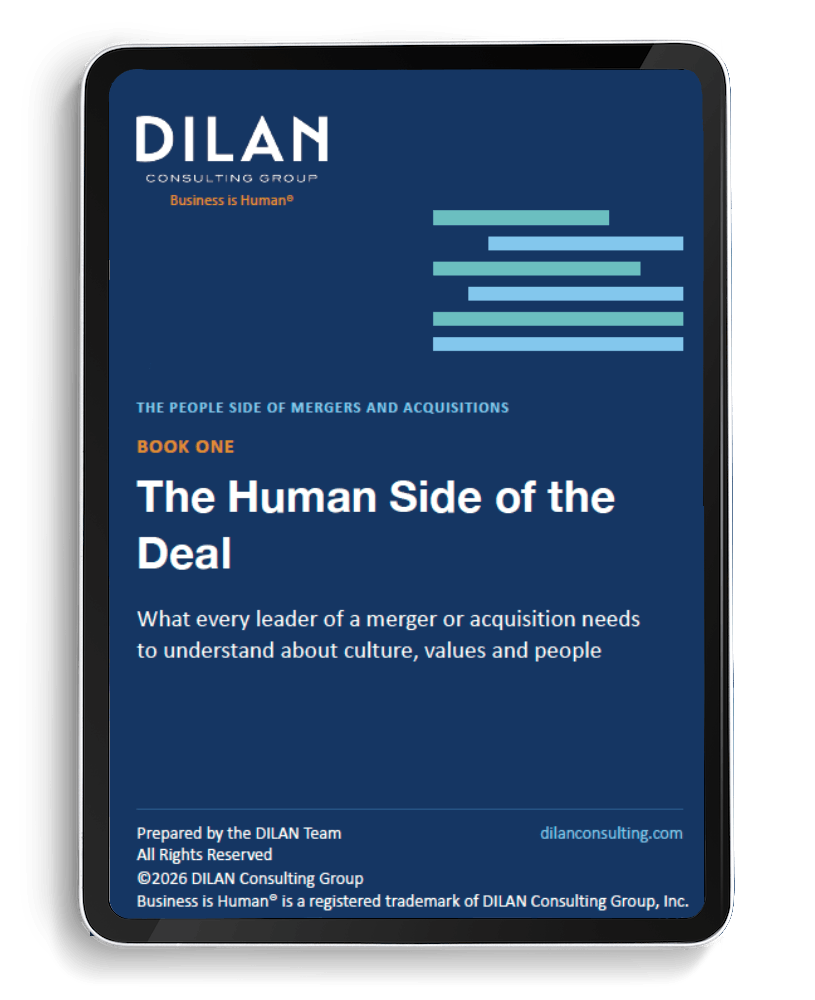
Go Deeper: Book One, The Human Side of the Deal
How do you determine which cultural differences matter most, and whether your organization is ready? Book One explores M&A outcomes, approaches to combining organizations, and DILAN’s M&A People Readiness Check.
2. Leaders and Employees Experience the Same Merger Differently
By the time a merger is announced, senior executives may have spent months evaluating the transaction and preparing for the transition. For most employees, the announcement is when the change begins.
Executives may be excited about strategic opportunities while employees are still processing what the merger means for their careers, relationships, and sense of belonging. Even those who understand the rationale may feel anxious.
A manager may lose decision-making authority. A valued employee may worry that years of contributions will no longer count. These reactions are not necessarily opposition to the merger. They often reflect uncertainty about what people stand to lose.
Effective organizational change management requires more than communicating decisions. It requires understanding how people experience change and helping them navigate the transition.
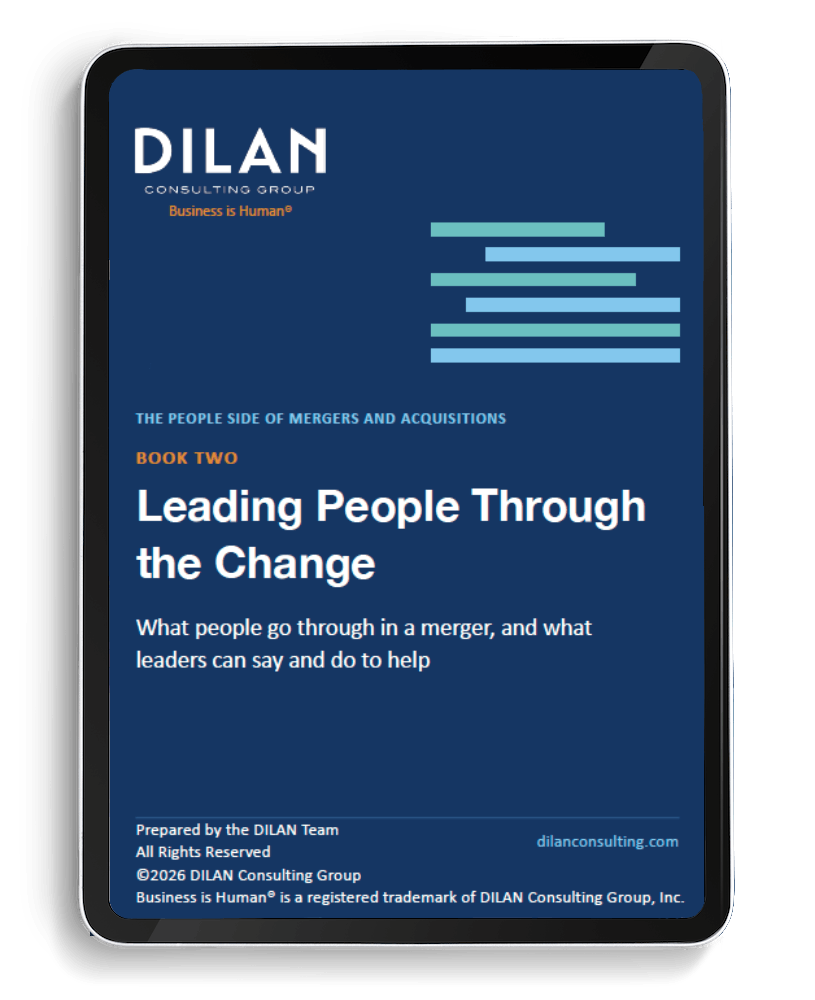
Go Deeper: Book Two, Leading People Through the Change
Why do employees respond so differently to change? Book Two explores uncertainty, identity, fairness, and perceived control, and offers frameworks leaders can use to guide people through transition.
3. A New Organizational Chart Doesn’t Create a New Culture
After the merger, reporting relationships are established, departments combined, and new policies introduced. Necessary as these steps are, they do not automatically create a cohesive organization.
One group may expect managers to make decisions independently; another may expect extensive consultation. Without shared expectations, both may conclude the other is difficult to work with. The same dynamic can affect executives who publicly support the merger while privately defending their former organizations.
Keeping a leader on the payroll is not the same as keeping that leader engaged in the organization’s future. Shared culture requires deliberate leadership, relationships across boundaries, common expectations, and consistent behaviors.
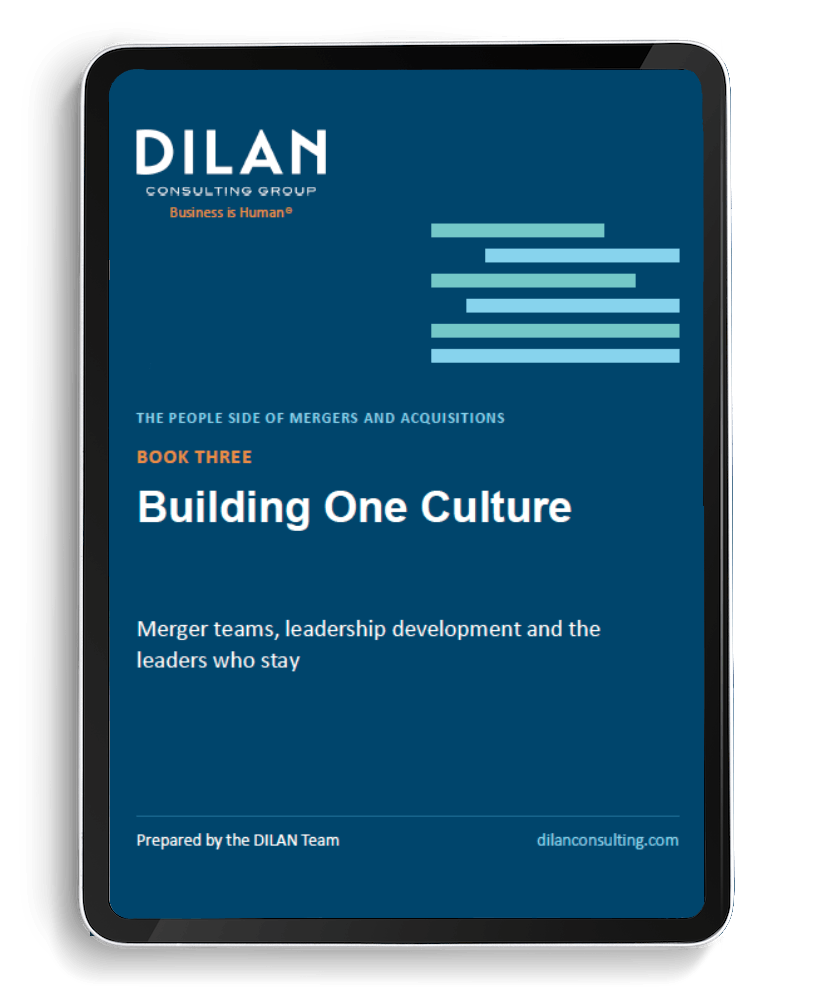
Go Deeper: Book Three, Building One Culture
How do you build a leadership team and culture that can sustain performance? Book Three explores integration teams, shared values, leadership development, and retaining key executives.
The Leadership Question That Matters Most
Culture, communication, employee engagement, leadership development, and talent retention are deeply connected. Trust shapes how people interpret decisions. Perceived fairness affects engagement. Collaboration influences whether the combined organization can achieve its objectives.
The human side of integration cannot be delegated entirely to HR or addressed only through a communications plan. It requires active involvement from executives and managers throughout the organization.
Before your next integration meeting, ask: Are we spending as much time understanding how people will work together as we are determining how the businesses will operate together?
Business is Human®: A Three-Part Guide to M&A Integration
DILAN Consulting Group developed The People Side of Mergers and Acquisitions, a three-part Business is Human® e-book series combining organizational psychology research with practical insights and tools for business leaders.
Book One: The Human Side of the Deal. Understand cultural and organizational challenges and assess readiness.
Book Two: Leading People Through the Change. Understand the psychology of change and help employees navigate uncertainty.
Book Three: Building One Culture. Build effective integration teams, shared leadership expectations, and long-term commitment.
Navigating a Merger or Acquisition?
DILAN Consulting Group brings together licensed psychologists and experienced business consultants to help organizations navigate the human challenges of change, from executive coaching and leadership development to team alignment and organizational change management.
Because while financial strategy may bring two companies together, it is people who determine what happens next. Business is Human®.
Explore Our Consulting Services: https://dilanconsulting.com/consulting-services/ | Contact DILAN: https://dilanconsulting.com/contact/